How Gheremi Clay Is Building Clay Collective With Werk
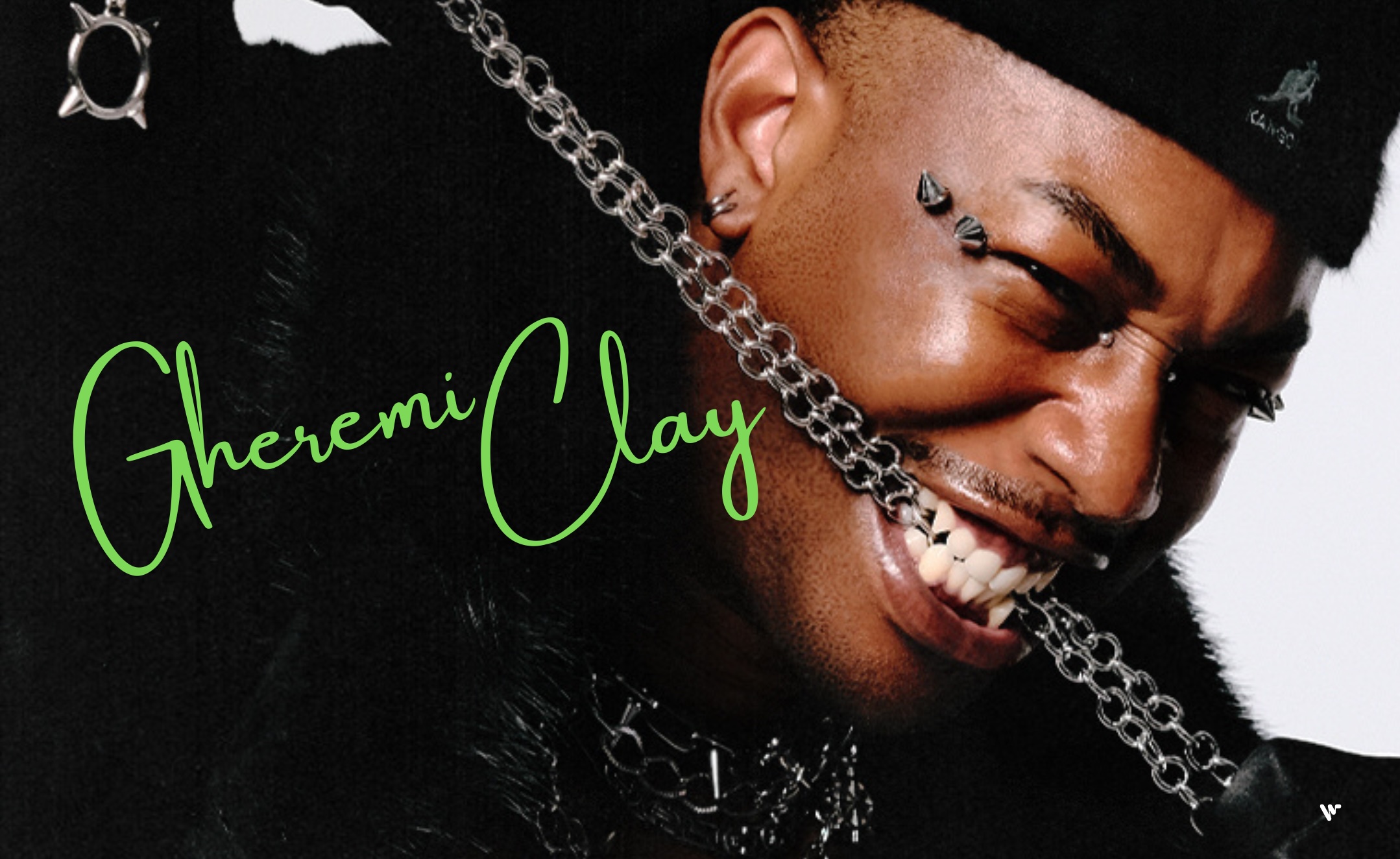
He Choreographs Every Piece, Directs Every Show, and Still Makes Every Dancer in Clay Collective Feel Like Family. Meet Gheremi Clay.
The LA-based choreographer and director founded Clay Collective in 2024 with a conviction that's equal parts artistic and personal: dance companies should feel like families.
We're trying to build a family, a family needs a home. Werk is that home."
– Gheremi Clay, Founder, Clay Collective Collective
Gheremi Clay didn't set out to start a company. He just wanted to put on a show. A Saint Louis native who stumbled into dance at sixteen – after spending years learning steps from High School Musical and Cheetah Girls in his grandmother's living room – Gheremi went on to train seriously at the Center of Creative Arts under teacher Lee Nolting, and never looked back.
By the time he landed in Los Angeles, he had the skills of a professional dancer and the mind of a director. In 2024, he pulled together a group of artists he genuinely loved and said: let's just see what happens.
What happened is Clay Collective: a performance company rooted in community, built on trust, and powered by Werk.
The Dancers of Clay Collective: Artistic Muses & Administrative Leaders
At Clay Collective, the line between dancer and collaborator is intentionally blurry. Clay doesn't just choreograph on his company members – he builds with them.
"I always want it to feel like a family. And although family has its challenges, its ups and its downs, most importantly it's rooted through love."
Sabian Reign
OG Member · Movement Anchor
Gheremi calls Sabian "the blueprint of a lot of my Clay Collective movement." He doesn't just execute the choreography – he pushes Gheremi as a creator and holds down the room when Gheremi isn't in it. "He offers me space and time to create on him, and I trust him to run rehearsal if I'm not there."
Kayla Anaís
OG Member · Management & Artistry
Kayla does double duty – she keeps the operational side of Clay Collective moving while serving as one of Gheremi's primary creative muses. "She really emphasizes what it means to be a muse to me whenever I'm creating more feminine work or more hard-hitting work. She connects herself to those spaces completely, no complaints. She's just there."
Maddie Skowronek
OG Member · Technical Lead
Gheremi's "technical queen." For the company's April show, Skowronek learned an entire solo – Acceptance, performed to Robert Glasper's "Better Than I Could Have Ever Imagined" – almost entirely from video, after just one partial rehearsal together. "She made it her own while staying true to what I was creating. It's my favorite piece in the show."
Maceo Sicam
Newer Member · Storyteller
One of the company's newer additions, Sicam brings an intellectual depth that Gheremi finds hard to stop talking about. "He hears something in the music that nobody else hears — something in the background – and he just goes there. Every time, I'll send him a message after: I heard that. I saw that."
"I try my best to make sure it's not just a space where they're learning steps. I want to help build who they are as people, as artists, within their careers."
Show Ticketing on Werk: Easier Than Eventbrite
For Clay Collective's April 2024 show Collision, Gheremi chose Werk for ticketing – and the difference was immediate.
"I love how straight to the point it is. How clear, how concise. I can see everything right off the bat — no extra searching, no figuring things out." Writing descriptions, setting prices, uploading the flyer, generating a shareable link — all of it just worked. Every ticket purchase triggered an email notification, making follow-up communication effortless."
The real proof came from his audience.
"I can figure things out technically. But my mom sometimes needs extra time with tech. She figured it out without any confusion. Finally – a platform that doesn't make her feel lost."
They'd used Eventbrite before.
"We weren't hitting major problems, but there was a lot of runaround. We were still fielding a ton of questions." With Werk, that stopped entirely. People understood everything. They knew where to go. It was just so easy, so breezy."
Master Classes & Workshops: Community Is the Business Model
Shows are just one part of what Clay Collective does. From the jump, Clay has operated with a core belief: this company exists for the community, not just the stage. That belief has a real, tangible form: master classes and workshops, all open to the public and free for Clay Collective members.
"We're trying to reimagine what the dance industry and community looks like," Gheremi says. The workshops run up to six hours, bring in multiple guest teachers, and reflect Gheremi's deeply personal approach to curation: he's not booking names. He's booking people.
"I operate from a Southern Black diaspora. Everything I do comes from my culture, my connection, the people I truly feel are making a difference – not just in the community, but within themselves. I don't care about follower counts. I care about what they're actually doing in the space."
When Gheremi brings guest teachers into the fold, he also brings them onto Werk – not as a sales pitch, but as a practical hand-up.
"Why should they have to post a Venmo link and give out their personal information?"
Instead, teachers create profiles on the platform, manage their own class listings, and get discovered by students who find them through Clay Collective's events. Werk creates a creative eosystem where everyone benefits, not just the organizer.
The Werkspace: A Blessed House
For a company that defines itself as a family, "where do we rehearse" is never a purely logistical question. It carries weight. Clay Collective has made the Werkspace their base of operations.
"If we're trying to build a family, a family needs a home." In Los Angeles, where studio space is competitive and nothing comes cheap, that home matters. For Clay Collective, the Werkspace is it."
Clay Collective had their first creative meeting at the Werkspace.
All their rehearsals for Collision happened there.
And after the show, they came back for the watch party.
"It felt like an entire storyline – starting somewhere, feeling good there, and just continuing it."
Gheremi is one of thousands of dance teachers, creators, and community leaders building their businesses as Werk Members.
If you're ready to do the same, join Werk today!